Skip to content



Recognising the symptoms of implantation bleeding and telling them apart from menstruation or a possible miscarriage is a very common concern among women trying to conceive.
Although it does not always occur, it is important to understand why it happens, how we can identify it, and in which cases it may be advisable to consult a specialist.
What is implantation bleeding?
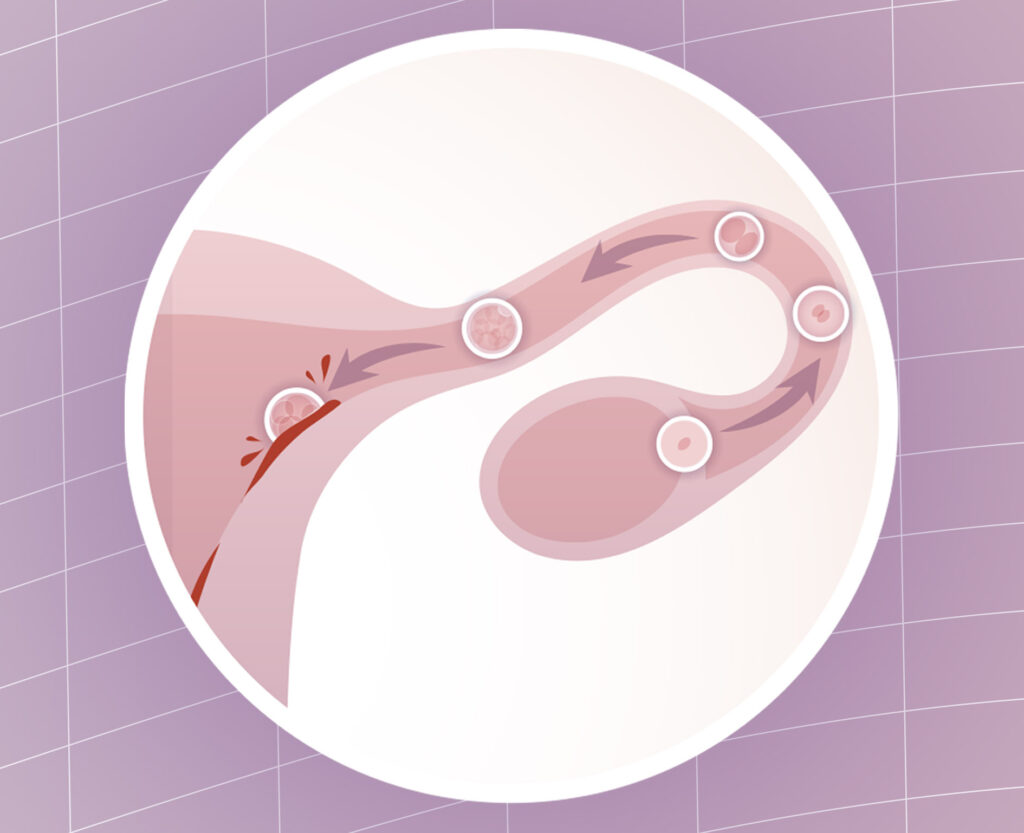
We refer to implantation bleeding when small amounts of blood are released as a result of the embryo attaching to the uterine wall.
This light bleeding is relatively common. Some women may experience it and others may not. It can be confused with a light period and is not a sign of poor prognosis.
Generally, the symptoms of implantation bleeding tend to be mild, disappear quickly and do not require any treatment or special care, beyond ensuring that it is indeed implantation bleeding and not blood loss caused by other reasons.
Why does it occur?
During the early stages of pregnancy, many small blood vessels form to allow the newly implanted embryo to receive nutrients from the mother.
These vessels, which grow as pregnancy progresses, are initially very thin and fragile. Sometimes one of them may break, causing a small hematoma or slight bleeding, which is why it is called implantation bleeding.
How can we identify it?
As mentioned earlier, it can sometimes be confused with a light period or even a possible miscarriage. Implantation bleeding is a frequent cause of worry because of the fear of confusing it with a miscarriage.
Many women are also concerned when this bleeding does not appear and may think they have not achieved pregnancy for this reason.
This is why it is important to understand the characteristics and symptoms of implantation bleeding.
When does implantation bleeding occur?
In natural conception, it typically occurs between the 4th and 6th week of pregnancy, meaning 10 to 14 days after the egg has been fertilised by the sperm.
If an embryo transfer has been performed after IVF treatment, this bleeding may occur a few days after transfer or during the following two weeks.
Differences between implantation bleeding and menstrual bleeding
Colour
The colour of the blood is important. Menstrual bleeding is usually a brighter red, while implantation bleeding tends to have a brownish tone.
Amount of blood
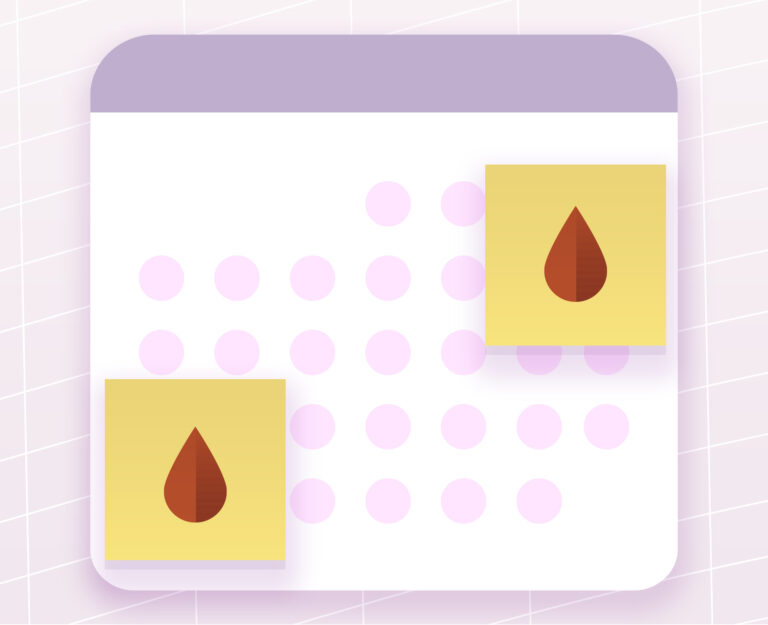
Implantation bleeding is usually very light — sometimes just a few drops or light spotting — because it comes from superficial uterine blood vessels. Menstrual flow, although variable among women, is generally heavier. Also, implantation bleeding tends to remain constant, while menstrual bleeding gradually increases.
Duration
Implantation bleeding usually lasts 1 to 3 days, whereas menstruation typically lasts 2 to 7 days.
Discomfort
Implantation bleeding normally is not accompanied by pain. Mild abdominal cramps may appear but tend to be very light. Menstruation, on the other hand, is often preceded by premenstrual symptoms, which many women can recognise easily.
Why does it occur sometimes and not others?
According to statistics, around 1 in 3 pregnant women may experience this type of bleeding during embryo implantation. However, many women may not notice it at all. There is no rule or standard, nor is it an indicator of how the pregnancy will progress.
There is also no connection between implantation bleeding and natural conception or IVF. It is independent of the method by which pregnancy was achieved.
What should I do if this bleeding occurs?
In principle, nothing needs to be done, as it is a natural process that does not pose any risk to the embryo. We simply recommend observing whether the spotting matches the usual pattern of implantation bleeding in terms of amount, duration, colour, etc.
If the bleeding is heavy, bright red, and accompanied by strong pain, it is advisable to contact a specialist to rule out other causes.
How long after implantation bleeding can I take a pregnancy test?
When women suspect they may be experiencing implantation bleeding, many feel tempted to take a pregnancy test to confirm that the pregnancy is progressing. However, we do not recommend taking a test at this stage because the result will likely be unreliable. A test would probably show negative because it is still too early to detect the pregnancy hormone.
Whether bleeding has occurred or simply due to nerves and anticipation, it is better to wait to obtain a reliable result.
What other symptoms may indicate that implantation bleeding has occurred?
Implantation bleeding has no symptoms of its own beyond the characteristics already mentioned. However, once identified, it may be considered an early sign of pregnancy, joining other possible symptoms that may give clues about conception.
Although every case is unique and symptoms vary, some common signs after embryo implantation include:
• Implantation bleeding itself — occasional but helpful in understanding what is happening inside the body.
• Breast tenderness — some women may experience swelling, tightness or increased sensitivity.
• Back pain, especially in the lower back.
• Nausea or vomiting in some cases, as well as aversion to certain smells or tastes.
• Increased need to urinate.
• Greater sleepiness and fatigue.
We stress that these are generalities. They may occur in many pregnancies but not all, and should not be used to confirm or rule out implantation.